What our autopilot is allowed to do on its own, and what makes it stop
"AI that optimizes your site while you sleep" sells well and makes for an uncomfortable product. The first question anyone sensible asks is what exactly it will do without asking them, so here's the whole answer.
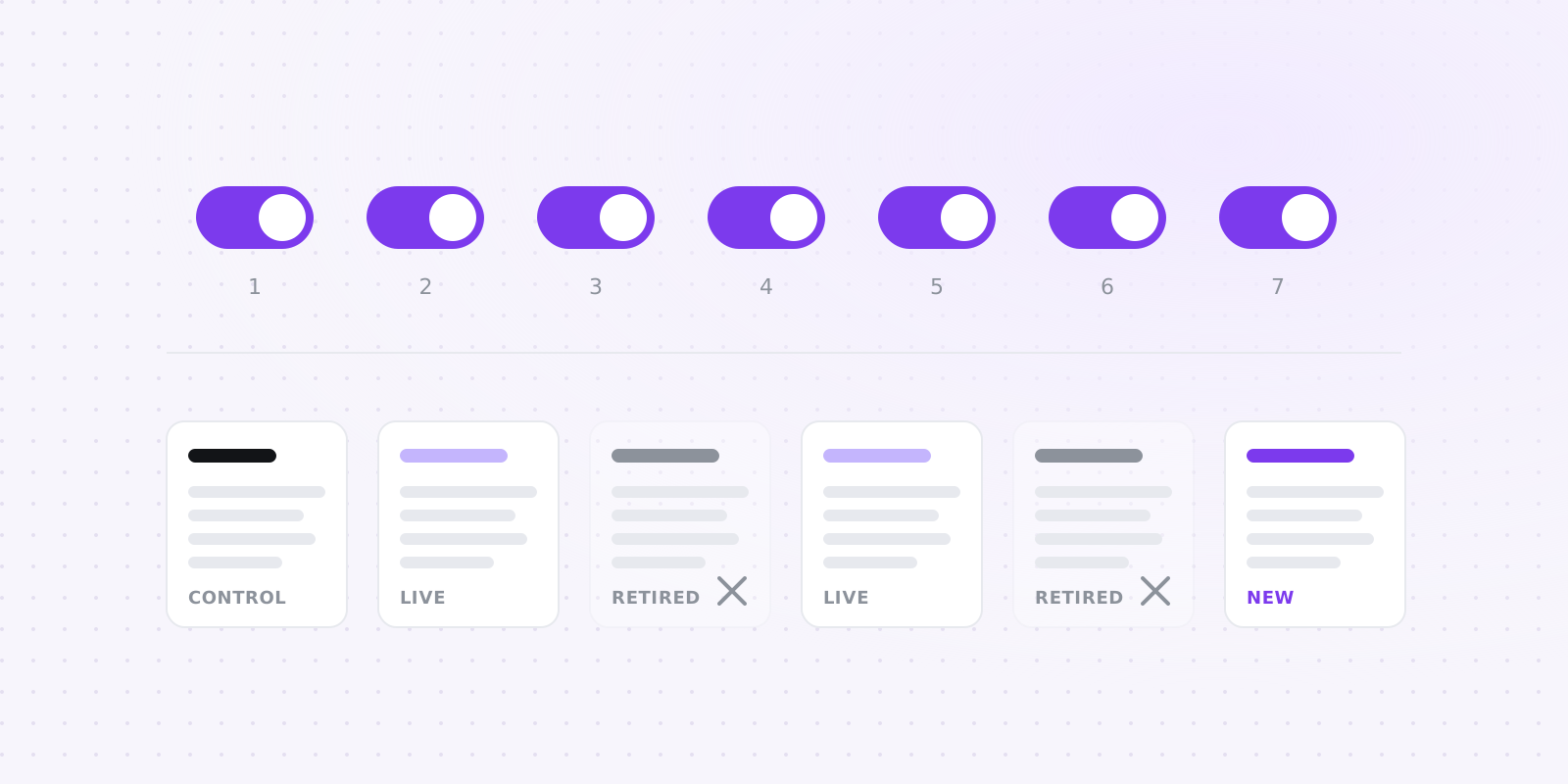
With autopilot on, for one bandit experiment, Evolve will retire clear losers so they stop getting traffic (the variant then reads "Retired · clear loser"). It writes new AI variants to keep the number of arms you asked for in Target arms, and it approves the suggestions that pass every check, second-model review included, starting each one at no more than 20% of traffic.
That's the full list. Autopilot never promotes a winner to all of your traffic, and it doesn't touch your goals, your locked fields, other experiments or your code. Rollback runs whether autopilot is on or off, so a variant that slows the page still gets paused.
#Seven conditions before it can turn on
The Autopilot card on an experiment lists these and marks which ones hold. All seven have to:
- The experiment is a running bandit. A fixed split exists to measure every arm, and retiring arms would defeat it.
- The primary goal's window is 7 days or less, because with a 30-day goal the bandit would act on a few days of half-counted conversions.
- Auto-rollback is on.
- AI is allowed for the site.
- Aggregates are fresh and aggregation is healthy.
- No guardrail is failing.
- A person has saved the brand profile.
Number seven is deliberate. The AI writes against the brand profile, and the judge checks claims against it. We can draft one from your site's pages, but someone on your team has to read it and press save before the AI may approve its own work.
#It stops when the data stops
Freshness isn't only checked at switch-on; autopilot watches it the whole time. If results stop updating (your app is down, the aggregate route returns errors, or the cloud can't reach your server), autopilot pauses itself and leaves the experiment exactly as it is until the data is fresh again.
Of all the rules, we'd keep this one if we could only keep one. An optimizer working from stale numbers does more harm than no optimizer, because it keeps making confident decisions about a site that has moved on. Pausing costs almost nothing: the experiment goes on serving its current variants at their current weights.
Guardrails behave the same way. Suppose you're testing sign-ups and allowed purchases to drop at most 5%. A variant that crosses that line gets paused under autopilot, and the failure lands in your Inbox.
#Six variants, then a new round
An experiment holds at most 6 variants over its whole life, counting control and the retired ones. When autopilot has used every slot it stops adding, and Start next round creates a new draft with control plus the survivors; whether to start it is your call.
The limit comes from the protocol more than from any philosophy. Still, it means that every few rounds a person looks at what survived and decides whether to keep going, and we've come to like that.
#Your part
Autopilot keeps the loop turning. Picking a region worth testing is still yours, as is choosing a goal that actually pays (sign-ups that activate rather than clicks) and keeping the forbidden-claims list current. When a variant reaches Ready to promote, you decide whether it becomes the new control in code.
If you're not ready for any of that, the approval queue does everything autopilot does except the approving. The marketer guide covers both.